
Arrest Warrants in Kinney County
An arrest warrant is a judge's order to arrest. It is a judicial command. Texas procedure has a complaint or affidavit reviewed by a magistrate for probable cause. Kinney County felonies run through the 63rd Judicial District Court. Fine-only Class C matters can involve a JP or municipal judge as magistrate. The issuing court holds the record and decides any request to recall or quash. A docket calendar is not a warrant search. The Kinney County sheriff posts no public warrant list.
Kinney County Felony Arrest Warrants Route Through Del Rio
Felony cases in Kinney County go to the 63rd District Court. That court also serves Edwards, Terrell, and Val Verde Counties. Its Del Rio number is (830) 774-7523. Kinney County keeps its district-court filings local through the combined clerk, even when a setting happens in Brackettville. For felony papers, start with the Kinney County District Clerk page or with the district court. The county's combined County Clerk page covers that same shared office. Ask which court holds the file. Then request the copy. The county clerk page spells out the combined-office route Kinney County uses.
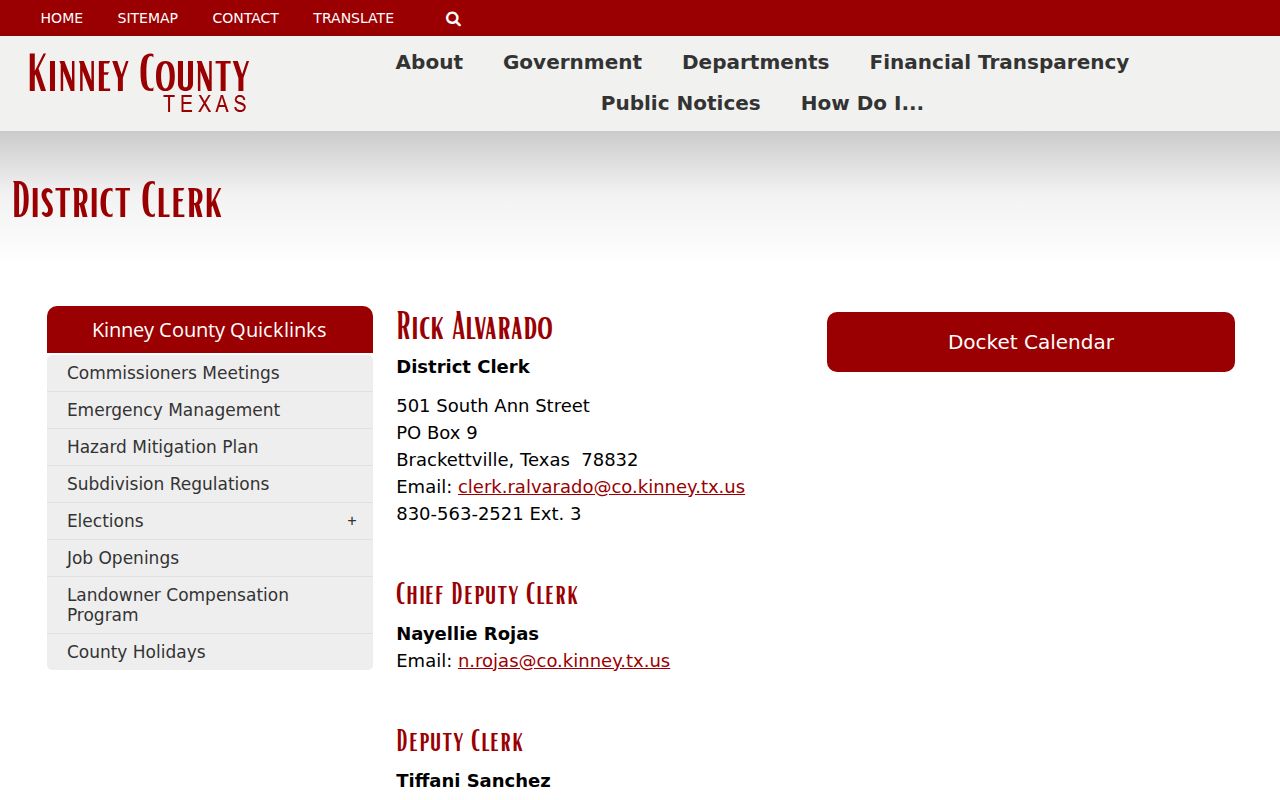
It helps connect a district case to the clerk who keeps local records.
What a Kinney County Arrest Warrant Contains
Texas law lists what a complaint must hold. That includes the accused's name or a reasonably definite description, the alleged offense, and the time and place as definite as possible. The affiant signs it. No Kinney County sample warrant or local number format appears online.
| Warrant number | Local format not published |
|---|---|
| Named person | Name if known or a reasonably definite description. |
| Offense | The alleged offense and supporting complaint or affidavit. |
| Issuing judge or court | Identifies who authorized the process. |
| Bond terms | Amount and type are case-specific; no Kinney schedule was located. |
| Issue and return dates | Ask the clerk for the record and current execution status. |
Public Access to Executed Kinney County Arrest Warrants
Texas Code of Criminal Procedure article 15.26 makes an executed Kinney County arrest warrant public information, along with its supporting affidavit. The rule kicks in at execution. Requests go through the magistrate's clerk during normal hours, and copies cost the copying cost. Unexecuted or sealed papers stay outside that rule. Juvenile warrant records carry a separate confidentiality rule, and protected investigation details can be withheld too. Ask the clerk for the specific legal basis. In Kinney County, confirm the warrant has been executed before relying on that timing. The official Chapter 15 text spells out the access rule.
How Kinney County Arrest Warrants Are Served
Who actually shows up depends on the warrant and where it lands. In Kinney County, a sheriff's deputy, a constable, or a municipal peace officer can execute an arrest warrant, each acting within the limits of their own authority. The county publishes no assignment chart, so treat no single office as the one that handles every warrant. For service confirmation, call the sheriff. Constable questions about process go to that constable's office. An arrest sends the person into custody at the detention center, where booking happens, magistrate warnings follow, and a bond decision comes next. Before you travel there, call the facility and ask about current intake or bond instructions. Kinney County makes no walk-in surrender arrangement and offers no same-day release promise.
Kinney County Arrest Warrant Service Roles
The Kinney County Sheriff's Office sits at 109 North Street in Brackettville, phone (830) 563-2788. The constable answers at (830) 563-5854 through the courthouse. No chart maps warrant categories to agencies. So use each number to ask which office handles your case. The county's constable contact page shows the process-service route.
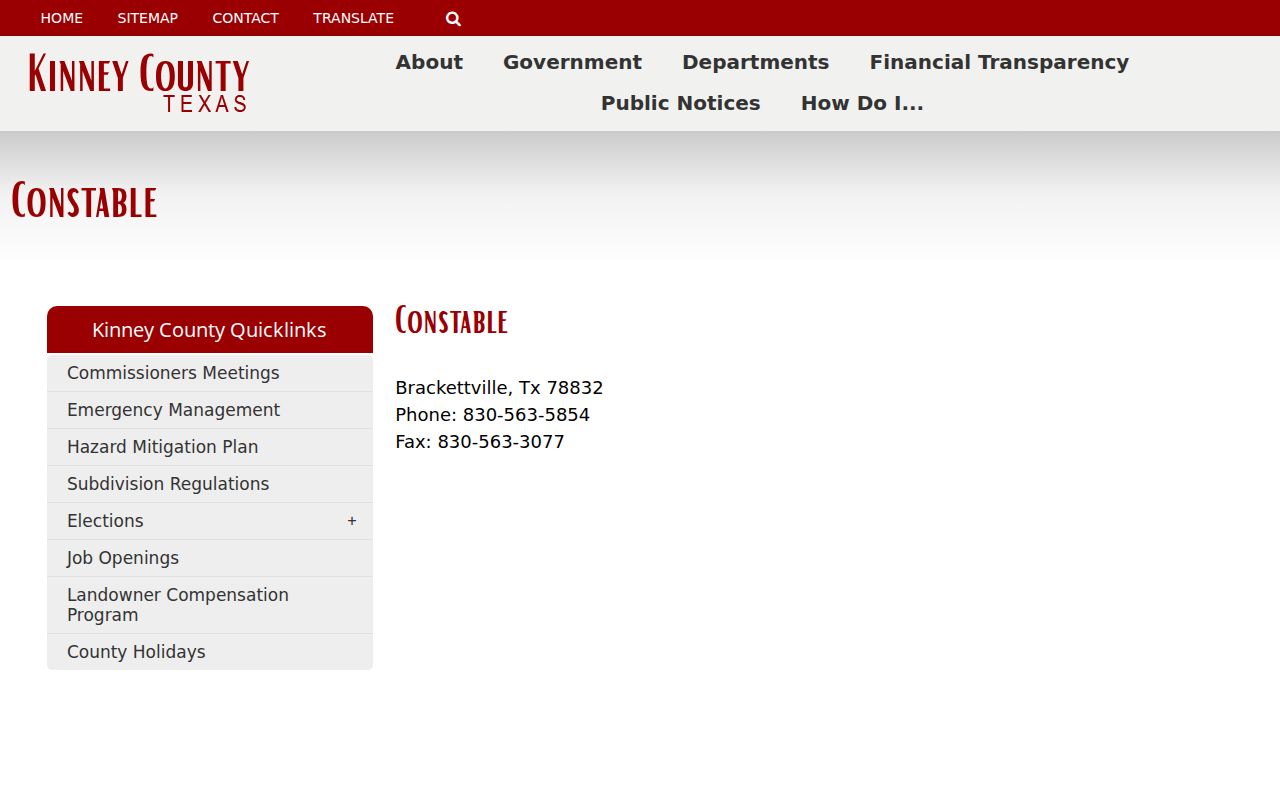
Use the Kinney County constable contact for process-service questions, not as a substitute for the issuing court's warrant status.
Kinney County Arrest Warrant vs Summons vs Bench Warrant
An arrest warrant comes after probable-cause review and commands an arrest. A summons or citation just tells you to appear. A bench warrant answers a missed court duty in an open case. The Kinney County issuing court can confirm which applies.
| Feature | Arrest Warrant | Summons | Bench Warrant |
|---|---|---|---|
| What it orders | Arrest under the warrant | Appear on the stated date | Arrest for a missed obligation |
| Basis | Probable cause | Notice or citation process | Failure to appear or comply |
| Who issues it | Authorized judge or magistrate | Court or authorized officer | Judge in the existing case |
| Response | Confirm with court and counsel | Appear as directed | Ask that court about recall or reset |
Kinney County Arrest Warrant Bond Schedule Is Unpublished
Kinney County publishes no bond schedule. There is no online bond portal, no walk-in surrender form, and no posted jail bond-window hours. Texas allows cash, surety, or personal bond, but the amount and eligibility are set case by case. The County Clerk's general payment methods are not a jail bond policy. The detention center sits at 1501 Ranch Road 131. Its number is (830) 563-6222. Call and ask who may post, what payment the facility accepts, and when the magistrate reviews the matter. The operator's official facility page posts the contact details.

Confirm intake and bond details with the facility before travel.
Kinney County Federal Warrants Are Separate
Kinney County falls inside the Del Rio Division of the U.S. District Court for the Western District of Texas. Federal arrest warrants sit outside county records. They do not appear on any sheriff list. Confirm them with the federal court or the agency involved. PACER and federal docket tools are not county warrant portals. The court posts its Del Rio office details on its official locations page, and the court's location page shows the federal clerk route that covers Kinney County. A public-information request to Kinney County cannot create or verify a federal record.
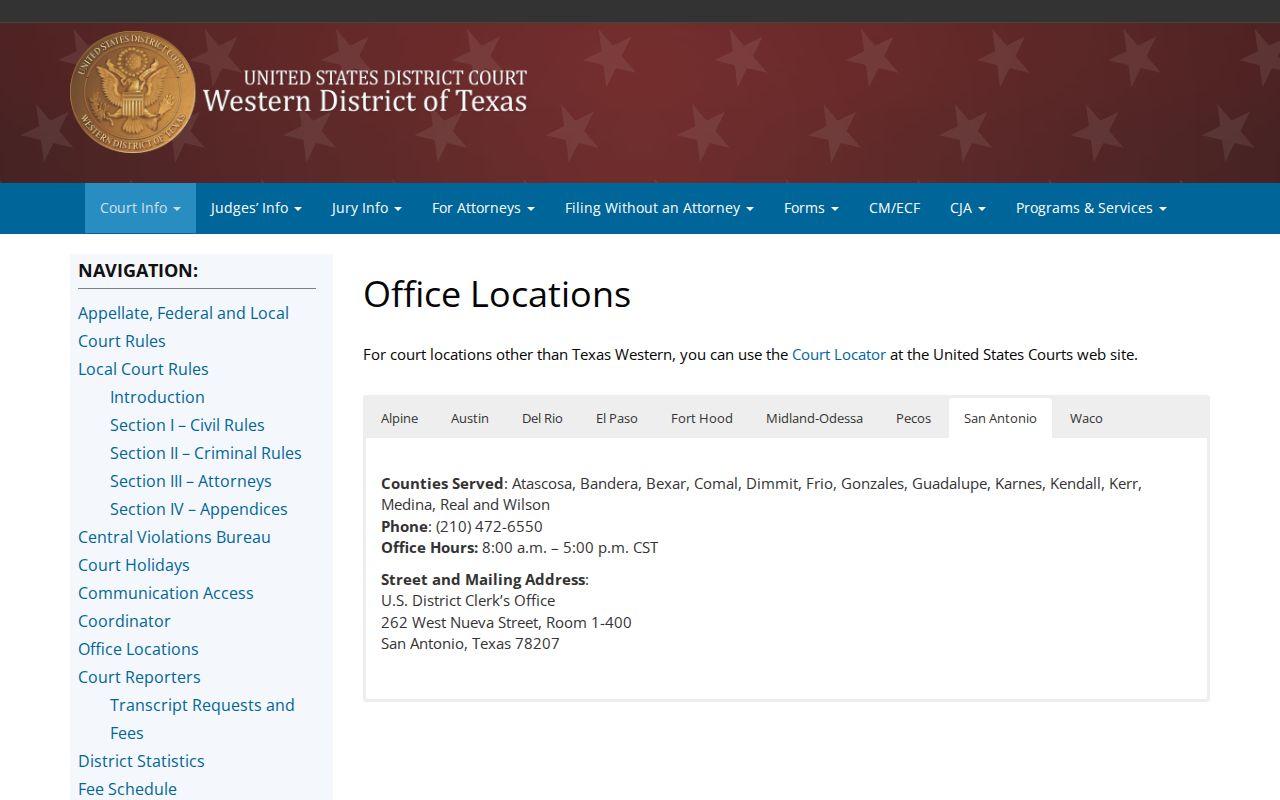
Use that contact for federal case access, not a local sheriff status.
What to Do About a Kinney County Arrest Warrant
Start by confirming the details with the issuing court: the charge, case number, warrant status, and bond terms. Talk to a Texas defense attorney before you appear. Your lawyer can reach out to the court, plan a surrender or booking, and tell you whether bond, a recall, or another filing fits your case. Kinney County publishes no safe-surrender protocol. If the warrant has already been executed, ask the detention center which intake and bond steps apply now. After a release or recall, get the court's written order or docket entry. Then ask the sheriff whether its records show the warrant status as current.
Important: Do not appear at the sheriff or detention center without confirming the court process; speak with counsel and the issuing court first.